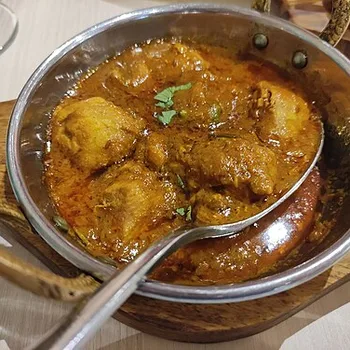
Spicy Kolhapuri Chicken Curry
Kolhapuri chicken is one of the boldest, best-known spicy dishes of western India: tender chicken cooked in a dark red sauce flavoured with toasted coconut, garam masala and Kashmiri chilli. Its glycemic index does not apply because it contains almost no net carbohydrate, and it is a fiery protein dish that boosts metabolism.
Glycemic index
Glycemic load
Calories
Protein
💡 Smart Nutritional Guidance
Consumption advice
Eat the chicken and its rich sauce with a spoon alongside cucumber raita to cool the heat, and don't overdo the white rice.
Best preparation methods
Toasting coriander and cumin seeds with freshly grated coconut gives the sauce a naturally thick texture without any flour or starch.
Important Nutritional Note
Hot Indian spices are loaded with natural antioxidants and antimicrobials, but the dish is very spicy and calls for caution with a sensitive stomach or reflux.
Nutrition facts
| Nutrient | Per 100 g | Per typical portion (250 g) |
|---|---|---|
| Calories | 124 kcal | 310 kcal |
| Protein | 13.2 g | 33 g |
| Carbohydrate | 2 g | 5 g |
| Available carbohydrate | 1.3 g | 3.2 g |
| Fat | 7.2 g | 18 g |
| Dietary fibre | 0.7 g | 1.8 g |
The typical portion is approximate, for comparison purposes.
Comparison & smarter alternatives
It has 124 kcal per 100 g, ranking 6 of 10 in Indian dishes (lowest first).
Related foods from the same family:
Frequently asked questions
Is Kolhapuri chicken suitable for a keto diet?
It is an exceptional keto dish: chicken and lean protein with healthy coconut fat and completely sugar-free spices.
What is the nutritional value of a 250 g portion of Kolhapuri chicken?
The portion contains about 310 kcal, 33 g of high-quality protein, 18 g of fat and less than 5 g of carbohydrate from the spices.
Does Kashmiri chilli raise blood sugar?
It has no effect on blood sugar; it gives a deep red colour and a warm flavour with moderate heat and excellent antioxidants.
Reviewed by the WiBo Health medical team · Last reviewed 13 October 2026
Disclaimer: This guidance is for nutritional lifestyle orientation and does not constitute a diagnostic medical device under EU Regulation MDR 2017/745.