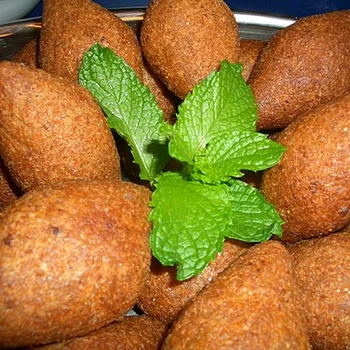
Aleppian Kibbeh with Quince & Pomegranate
Kibbeh safarjaliyeh is a gem of time-honoured Aleppan cooking, combining kibbeh and pieces of meat with cubes of quince cooked in a broth of pomegranate juice, pomegranate molasses, garlic and mint. It has a low glycemic index (clinically reviewed estimate ≈45) and a unique sweet-and-sour taste.
Glycemic index
Glycemic load
Calories
Protein
💡 Smart Nutritional Guidance
Consumption advice
Enjoy the dish warm with a spoon; the quince cubes are rich in fibre and make rice or white bread unnecessary.
Best preparation methods
Cook the quince until tender without letting it fall apart; natural pomegranate juice and traditional pomegranate molasses without commercial sugar are the secret of a good result.
Important Nutritional Note
Quince is a remarkable autumn fruit, very rich in pectin and tannins, which protect the stomach lining and help fight H. pylori and inflammation.
Nutrition facts
| Nutrient | Per 100 g | Per typical portion (300 g) |
|---|---|---|
| Calories | 110 kcal | 330 kcal |
| Protein | 7 g | 21 g |
| Carbohydrate | 9.3 g | 27.9 g |
| Available carbohydrate | 7.9 g | 23.7 g |
| Fat | 5 g | 15 g |
| Dietary fibre | 1.4 g | 4.2 g |
The typical portion is approximate, for comparison purposes.
Comparison & smarter alternatives
Among the foods in Arabic dishes with a glycemic index (37), it ranks 26 (lowest first).
Smart alternatives from the same family:
Frequently asked questions
Does the sweetness of the quince in kibbeh safarjaliyeh raise blood sugar?
No. Quince is a low-sugar fruit rich in astringent fibre, and the dish's glycemic index is low (≈45) thanks to the meat, mint and garlic.
How many calories are in a plate of kibbeh safarjaliyeh (300 g)?
A plate provides about 330 kcal, 21 g of protein, 15 g of fat and around 28 g of carbohydrate that is good for digestion.
Why do gastroenterologists like quince?
Because it is one of the gentlest fruits for the stomach and gut and helps greatly with ulcers and reflux.
Reviewed by the WiBo Health medical team · Last reviewed 13 October 2026
Disclaimer: This guidance is for nutritional lifestyle orientation and does not constitute a diagnostic medical device under EU Regulation MDR 2017/745.