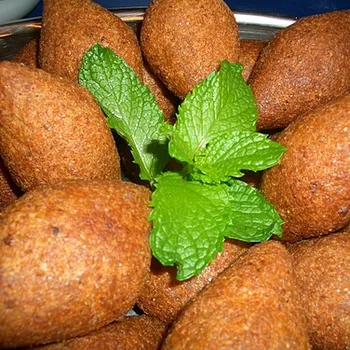
Kibbeh in Cooked Garlic Mint Yogurt
Kibbeh labanieh is one of the jewels of Aleppan and Levantine tables: stuffed kibbeh cooked in a silky yoghurt sauce seasoned with garlic and dried mint. It has a low glycemic index (clinically reviewed estimate ≈45) and combines great flavour with maximum comfort for the digestive system.
Glycemic index
Glycemic load
Calories
Protein
💡 Smart Nutritional Guidance
Consumption advice
Have two or three kibbeh with a generous ladle of warm yoghurt sauce, eaten with a spoon, without a side of rice.
Best preparation methods
Boil the kibbeh in water for three minutes first before dropping them into the cooked yoghurt, so they hold together and the yoghurt stays clean-tasting.
Important Nutritional Note
Cooked yoghurt provides calcium and lactic acid, which slow the digestion of the kibbeh's bulgur and protect against stomach upsets and reflux.
Nutrition facts
| Nutrient | Per 100 g | Per typical portion (300 g) |
|---|---|---|
| Calories | 107 kcal | 321 kcal |
| Protein | 7.3 g | 21.9 g |
| Carbohydrate | 8.7 g | 26.1 g |
| Available carbohydrate | 7.6 g | 22.8 g |
| Fat | 4.7 g | 14.1 g |
| Dietary fibre | 1.1 g | 3.3 g |
The typical portion is approximate, for comparison purposes.
Comparison & smarter alternatives
Among the foods in Arabic dishes with a glycemic index (37), it ranks 25 (lowest first).
Smart alternatives from the same family:
Frequently asked questions
Does kibbeh labanieh raise blood sugar quickly?
No. Its glycemic index is low (≈45), and the protein of the yoghurt and meat keeps long-term sugar levels in check and prevents sharp spikes.
How many calories are in a meal of kibbeh labanieh (two kibbeh with yoghurt, 300 g)?
The meal provides about 320 kcal, 22 g of protein, 14 g of fat and around 26 g of moderately absorbed carbohydrate.
Does cooked yoghurt lose its probiotic benefits?
Heat kills the live bacteria, but the yoghurt keeps all its protein and calcium and stays very easy to digest.
Reviewed by the WiBo Health medical team · Last reviewed 13 October 2026
Disclaimer: This guidance is for nutritional lifestyle orientation and does not constitute a diagnostic medical device under EU Regulation MDR 2017/745.