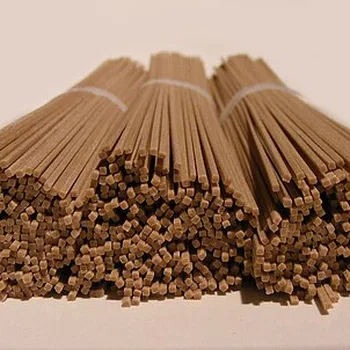
Japanese 100% Buckwheat Soba Noodles
The Japanese secret of health and longevity: dark brown noodles with a rich, earthy, nutty flavour, traditionally made from wheat-free whole buckwheat flour. A refined Japanese meal served cold with tsuyu dipping sauce in summer or hot in winter.
Glycemic index
Glycemic load
Calories
Protein
💡 Smart Nutritional Guidance
Consumption advice
Cold soba with strips of nori, spring onion and a little wasabi makes an ideal lunch that gives mental focus and steady energy all day.
Best preparation methods
Boil them for only 5 minutes, then rinse at once under ice-cold running water; rinsing removes the surface starch, gives the noodles their firm bite and lowers the glycemic index.
Important Nutritional Note
Their glycemic index is low (46) and their glycemic load moderate (12.6); they are rich in rutin, which strengthens blood vessels and helps lower high blood pressure.
Nutrition facts
| Nutrient | Per 100 g | Per typical portion (150 g) |
|---|---|---|
| Calories | 99 kcal | 148.5 kcal |
| Protein | 5.1 g | 7.6 g |
| Carbohydrate | 21 g | 31.5 g |
| Available carbohydrate | 18.2 g | 27.3 g |
| Fat | 0.1 g | 0.2 g |
| Dietary fibre | 2.8 g | 4.2 g |
The typical portion is approximate, for comparison purposes.
Comparison & smarter alternatives
Among the foods in Grains & starches with a glycemic index (39), it ranks 10 (lowest first).
Smart alternatives from the same family:
Frequently asked questions
How can I be sure soba noodles are wheat-free?
Read the ingredient list carefully and look for “100% buckwheat” (juwari soba), because many commercial brands mix buckwheat with ordinary wheat flour.
Is soba suitable for diabetes and insulin resistance?
It is one of the best complex carbohydrates for people with diabetes, thanks to D-chiro-inositol, which increases the cells’ sensitivity to insulin.
What is the nutritional value of a usual portion (150 g cooked)?
It gives you 148 kcal, 7.6 g of excellent plant protein, 0.2 g fat and 27.3 g available (net) carbohydrate with 4 g fibre.
Reviewed by the WiBo Health medical team · Last reviewed 13 October 2026
Disclaimer: This guidance is for nutritional lifestyle orientation and does not constitute a diagnostic medical device under EU Regulation MDR 2017/745.