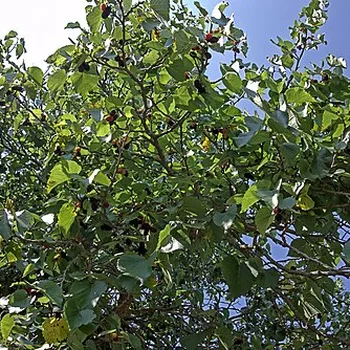
Fresh Black Persian Mulberries
The Levant’s luxurious summer fruit: dark berries bursting with crimson juice that blends sweetness with refreshing tartness, famous in the Levant as a natural pharmacy for the mouth and throat and for stimulating circulation.
Glycemic index
Glycemic load
Calories
Protein
💡 Smart Nutritional Guidance
Consumption advice
Eat them fresh in season as a refreshing snack on their own or with yoghurt and nuts; their deep red colour stains the fingers and is a sign of concentrated antioxidants.
Best preparation methods
Rinse them very gently in cold water and eat them fresh straight away; don’t boil them or add sugar, to keep their vitamin C and flavonoids.
Important Nutritional Note
Their glycemic index is very low (25) and the glycemic load of a 100 g portion is only 2.0; very rich in anthocyanins, which protect the lining of the blood vessels and reduce fat oxidation.
Nutrition facts
| Nutrient | Per 100 g | Per typical portion (100 g) |
|---|---|---|
| Calories | 43 kcal | 43 kcal |
| Protein | 1.4 g | 1.4 g |
| Carbohydrate | 9.8 g | 9.8 g |
| Available carbohydrate | 8.1 g | 8.1 g |
| Fat | 0.4 g | 0.4 g |
| Dietary fibre | 1.7 g | 1.7 g |
The typical portion is approximate, for comparison purposes.
Comparison & smarter alternatives
Among the foods in Fruit with a glycemic index (46), it ranks 10 (lowest first).
Smart alternatives from the same family:
Frequently asked questions
Do black mulberries raise blood sugar?
No. Their glycemic index is very low (25) and their sugars are slowly absorbed, making them one of the safest fruits for people with diabetes.
What are the benefits of black mulberries for the mouth and throat?
Mulberry extract has astringent and antimicrobial properties that help soothe mouth ulcers and inflammation of the gums and throat.
What is the nutritional value of a 100 g fresh portion?
It gives you 43 kcal, 1.4 g protein, 1.7 g fibre and only 8.1 g available (net) carbohydrate.
Reviewed by the WiBo Health medical team · Last reviewed 13 October 2026
Disclaimer: This guidance is for nutritional lifestyle orientation and does not constitute a diagnostic medical device under EU Regulation MDR 2017/745.