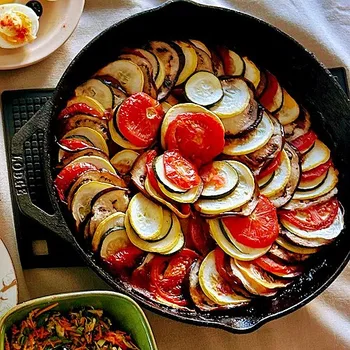
Provençal Ratatouille
Ratatouille is the icon of the Provençal countryside: a colourful harmony of aubergine, courgette, sweet peppers and tomatoes cooked in olive oil with aromatic herbs. It has a very low glycemic index (clinically reviewed estimate ≈25) and is a healthy feast, very hydrating and rich in fibre.
Glycemic index
Glycemic load
Calories
Protein
💡 Smart Nutritional Guidance
Consumption advice
An almost free-portion dish; eat it as a filling side next to grilled chicken breast or a fish fillet to add protein.
Best preparation methods
Arrange the vegetable rounds alternately in a dish and bake them with olive oil, rosemary, wild thyme and chopped garlic to preserve their vitamins.
Important Nutritional Note
Rich in potassium, vitamin C and antioxidants such as naringenin and anthocyanins; it is excellent for lowering blood pressure and fighting inflammation.
Nutrition facts
| Nutrient | Per 100 g | Per typical portion (200 g) |
|---|---|---|
| Calories | 72 kcal | 144 kcal |
| Protein | 1.8 g | 3.6 g |
| Carbohydrate | 8.5 g | 17 g |
| Available carbohydrate | 5.1 g | 10.2 g |
| Fat | 3.5 g | 7 g |
| Dietary fibre | 3.4 g | 6.8 g |
The typical portion is approximate, for comparison purposes.
Comparison & smarter alternatives
Among the foods in French dishes with a glycemic index (5), it ranks 1 (lowest first). This is one of the lowest-GI foods in its group.
Smart alternatives from the same family:
Frequently asked questions
Is ratatouille suitable for diabetes and a strict diet?
It is one of the best dishes of all: very low in carbohydrate, modest in calories, and it causes no spike in blood-sugar readings.
What is the nutritional value of a 200 g portion of ratatouille?
The portion contains about 145 kcal, 3.5 g of protein, 7 g of healthy fat and 17 g of carbohydrate (about 7 g of it fibre).
Can ratatouille be eaten cold?
Yes. In Provence it is eaten hot as a main dish or cold the next day with a few drops of lemon, and it stays delicious.
Reviewed by the WiBo Health medical team · Last reviewed 13 October 2026
Disclaimer: This guidance is for nutritional lifestyle orientation and does not constitute a diagnostic medical device under EU Regulation MDR 2017/745.