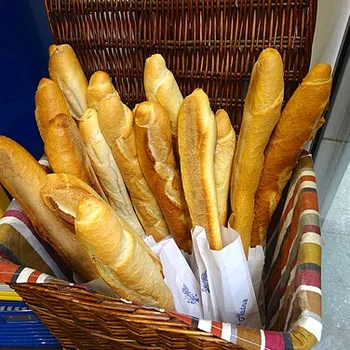
French Baguette
The icon of French bakeries, with a golden, crunchy crust and light white crumb. The baguette is made from highly refined white wheat flour, so its starch is absorbed very quickly, with a high glycemic index (≈73), which explains the quick return of hunger when you eat it on its own.
Glycemic index
Glycemic load
Calories
Protein
💡 Smart Nutritional Guidance
Consumption advice
Avoid eating baguette on its own or with jam; always pair your slice with protein and healthy fats such as natural cheese, eggs, or olive oil with za'atar to slow the rise in blood sugar.
Best preparation methods
Choose wholegrain baguette or slow-fermented sourdough if available; the lactic acid formed during slow fermentation can lower the glycemic index noticeably.
Important Nutritional Note
A small piece the length of your palm (about 50 grams) is enough to enjoy the French crunch; if you watch your weight and blood sugar, make it an occasional part of a balanced meal.
Nutrition facts
| Nutrient | Per 100 g | Per typical portion (50 g) |
|---|---|---|
| Calories | 272 kcal | 136 kcal |
| Protein | 9 g | 4.5 g |
| Carbohydrate | 55 g | 27.5 g |
| Available carbohydrate | 52 g | 26 g |
| Fat | 1.6 g | 0.8 g |
| Dietary fibre | 3 g | 1.5 g |
The typical portion is approximate, for comparison purposes.
Comparison & smarter alternatives
Among the foods in Breads & pastries with a glycemic index (8), it ranks 8 (lowest first).
Lower-GI alternatives:
Frequently asked questions
Is French Baguette good for weight loss?
It can be included in moderation: it contains 3 g of fibre per 100 g, which supports fullness, and a 50 g portion gives 136 kcal.
How does French Baguette affect blood sugar?
Its glycemic index is 73 (High), a clinically reviewed estimate rather than a laboratory measurement. A typical 50 g portion has a glycemic load of 19 (Medium), so it is best combined with protein or fibre-rich vegetables.
What is the nutritional value of a typical portion of French Baguette?
A typical 50 g portion of French Baguette provides about 136 kcal, 4.5 g protein, 27.5 g carbohydrate, 0.8 g fat and 1.5 g fibre.
Reviewed by the WiBo Health medical team · Last reviewed 13 October 2026
Disclaimer: This guidance is for nutritional lifestyle orientation and does not constitute a diagnostic medical device under EU Regulation MDR 2017/745.