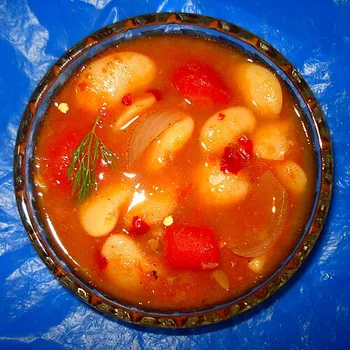
Fasolada Greek White Bean Soup
Fasolada is Greece's national soup: a traditional white bean soup cooked with generous olive oil, tomato, celery and carrot. It has a low glycemic index (clinically reviewed estimate ≈35) and is considered a secret of longevity and health on the Greek island of Ikaria.
Glycemic index
Glycemic load
Calories
Protein
💡 Smart Nutritional Guidance
Consumption advice
Have a warm bowl with black olives and rocket as a filling plant-based lunch that needs no bread alongside.
Best preparation methods
Soak the beans overnight and cook them until buttery-soft, then add the extra virgin olive oil in the last 10 minutes of simmering so it blends with the broth into a luxurious, emulsified texture.
Important Nutritional Note
Rich in soluble fibre, potassium, iron and magnesium; it effectively helps lower LDL cholesterol and support stable insulin levels.
Nutrition facts
| Nutrient | Per 100 g | Per typical portion (300 g) |
|---|---|---|
| Calories | 140 kcal | 420 kcal |
| Protein | 7.8 g | 23.4 g |
| Carbohydrate | 22 g | 66 g |
| Available carbohydrate | 15.2 g | 45.6 g |
| Fat | 3.2 g | 9.6 g |
| Dietary fibre | 6.8 g | 20.4 g |
The typical portion is approximate, for comparison purposes.
Comparison & smarter alternatives
Among the foods in Greek dishes with a glycemic index (6), it ranks 2 (lowest first).
Smart alternatives from the same family:
Frequently asked questions
Does fasolada soup raise blood sugar?
No. White beans have a low glycemic index (≈35), and their fibre slows the absorption of starch and keeps you full until the evening.
What is the nutritional value of a bowl of Greek fasolada (300 g)?
A bowl provides about 420 kcal, 23 g of plant protein, 20 g of excellent fibre and around 46 g of complex net starch.
Why do Greeks call it their national dish?
Because it is the historic food of ordinary people that built the health of generations of Greeks, combining high nutritional value with low cost.
Reviewed by the WiBo Health medical team · Last reviewed 13 October 2026
Disclaimer: This guidance is for nutritional lifestyle orientation and does not constitute a diagnostic medical device under EU Regulation MDR 2017/745.