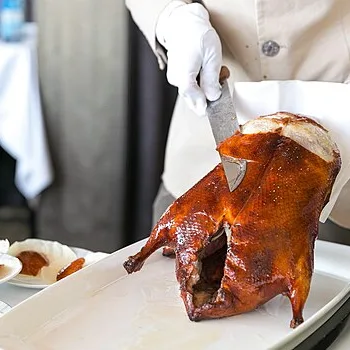
Crispy Peking Roast Duck with Hoisin Sauce
An icon of Chinese imperial cuisine: glassy, golden, ultra-crisp skin hiding tender, flavourful meat. Traditionally served with fresh cucumber strips, spring onion and hoisin sauce, rolled in thin Chinese pancakes.
Glycemic index
Glycemic load
Calories
Protein
💡 Smart Nutritional Guidance
Consumption advice
Load the roll with plenty of cucumber and spring onion to balance the richness of the duck, and enjoy the crisp meat without overdoing the sugary hoisin sauce.
Best preparation methods
Roasting the duck upright in the oven or an air-fryer lets most of the excess fat drain into the drip tray, keeping the golden crispness while cutting calories.
Important Nutritional Note
Duck meat has no carbohydrate and the dish’s glycemic index is very low (25), but commercial hoisin sauce contains sugar, so people with diabetes should use only a light brush of it.
Nutrition facts
| Nutrient | Per 100 g | Per typical portion (150 g) |
|---|---|---|
| Calories | 290 kcal | 435 kcal |
| Protein | 20 g | 30 g |
| Carbohydrate | 7 g | 10.5 g |
| Available carbohydrate | 6.2 g | 9.3 g |
| Fat | 20 g | 30 g |
| Dietary fibre | 0.8 g | 1.2 g |
The typical portion is approximate, for comparison purposes.
Comparison & smarter alternatives
Among the foods in Asian dishes with a glycemic index (24), it ranks 2 (lowest first).
Smart alternatives from the same family:
Frequently asked questions
Is Peking duck skin healthy or full of harmful fat?
Duck skin contains a good share of monounsaturated fat (oleic acid, the heart-friendly fat also found in olive oil), but it is high in calories and should be eaten in moderation.
Is Peking duck allowed on a keto diet?
Duck meat and skin are 100% keto-friendly, but swap the pancakes for lettuce leaves and use sugar-free soy sauce instead of hoisin.
What is the nutritional value of a 150 g portion of Peking duck?
A portion gives you 435 kcal, 30 g protein, 30 g fat and 9.3 g available (net) carbohydrate, most of it from the spoon of hoisin.
Reviewed by the WiBo Health medical team · Last reviewed 13 October 2026
Disclaimer: This guidance is for nutritional lifestyle orientation and does not constitute a diagnostic medical device under EU Regulation MDR 2017/745.