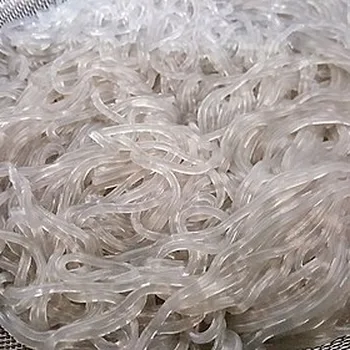
Cooked Glass Cellophane Noodles
Crystal-clear noodles made from pure mung bean starch: slippery, springy and fun to chew, with a remarkable ability to soak up soups and sauces without falling apart, and naturally gluten-free.
Glycemic index
Glycemic load
Calories
Protein
💡 Smart Nutritional Guidance
Consumption advice
Don’t eat them on their own as a plain bowl of noodles; add plenty of leafy vegetables and chicken strips or prawns to lower the glycemic load of the whole meal.
Best preparation methods
Soak them in hot water for just a few minutes instead of boiling them hard; over-boiling speeds up the breakdown of the starch, while a quick soak keeps its resistant, gel-like structure.
Important Nutritional Note
Their glycemic index is low (39) thanks to amylose-rich mung bean starch, making them an excellent substitute for regular noodles and white-flour pasta for people with diabetes.
Nutrition facts
| Nutrient | Per 100 g | Per typical portion (150 g) |
|---|---|---|
| Calories | 105 kcal | 157.5 kcal |
| Protein | 0.2 g | 0.3 g |
| Carbohydrate | 26 g | 39 g |
| Available carbohydrate | 25.5 g | 38.2 g |
| Fat | 0.1 g | 0.2 g |
| Dietary fibre | 0.5 g | 0.8 g |
The typical portion is approximate, for comparison purposes.
Comparison & smarter alternatives
Among the foods in Grains & starches with a glycemic index (39), it ranks 3 (lowest first).
Smart alternatives from the same family:
Frequently asked questions
Are glass noodles gluten-free?
Yes, 100%. They are made only from mung bean starch and water and are completely safe for people with coeliac disease.
Do glass noodles help with weight loss?
They are light once cooked (about 157 kcal per 150 g cooked portion) because they absorb a lot of water and fill the stomach, but their starch still has to be counted (38 g).
How do they differ from rice noodles?
Mung bean noodles release sugar much more slowly than white rice noodles, whose glycemic index is clearly higher.
Reviewed by the WiBo Health medical team · Last reviewed 13 October 2026
Disclaimer: This guidance is for nutritional lifestyle orientation and does not constitute a diagnostic medical device under EU Regulation MDR 2017/745.