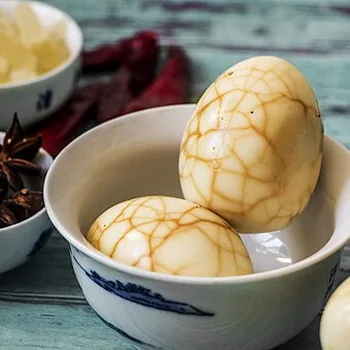
Chinese Five-Spice Marinated Tea Eggs
The most famous traditional snack of Asia’s streets and train stations: boiled eggs with cracked shells steeped for hours in a fragrant broth of black tea, cinnamon sticks, star anise and soy sauce, giving them a striking marbled pattern and a deep, earthy flavour.
Glycemic index
Glycemic load
Calories
Protein
💡 Smart Nutritional Guidance
Consumption advice
A complete protein snack for athletes and the workplace; keep it in the fridge and eat it cold as a quick bite that stops hunger between meals.
Best preparation methods
Tap the boiled egg’s shell gently with the back of a spoon to make fine cracks that let the tea compounds and antioxidants seep into the egg white.
Important Nutritional Note
Completely free of starch (carbohydrate close to zero), rich in choline, which supports the brain and liver health, and has no effect at all on blood sugar.
Nutrition facts
| Nutrient | Per 100 g | Per typical portion (50 g) |
|---|---|---|
| Calories | 148 kcal | 74 kcal |
| Protein | 12.8 g | 6.4 g |
| Carbohydrate | 1.2 g | 0.6 g |
| Available carbohydrate | 1.2 g | 0.6 g |
| Fat | 10.2 g | 5.1 g |
| Dietary fibre | 0 g | 0 g |
The typical portion is approximate, for comparison purposes.
Comparison & smarter alternatives
It provides 8.6 g of protein per 100 kcal, ranking 41 of 50 in Meat, fish & eggs (highest first).
Related foods from the same family:
Frequently asked questions
Does the tea marinade change the nutritional benefits of the egg?
On the contrary: black tea and star anise add antioxidant flavonoids and polyphenols, giving extra value without adding any calories.
Are tea eggs suitable for keto and intermittent fasting?
They are the golden choice for breaking an intermittent fast and ideal for keto and low-carb; they give steady fullness without stimulating insulin.
What is the nutritional value of one egg (50 g)?
One egg contains 74 kcal, 6.4 g protein, 5.1 g fat and 0.6 g carbohydrate.
Reviewed by the WiBo Health medical team · Last reviewed 13 October 2026
Disclaimer: This guidance is for nutritional lifestyle orientation and does not constitute a diagnostic medical device under EU Regulation MDR 2017/745.