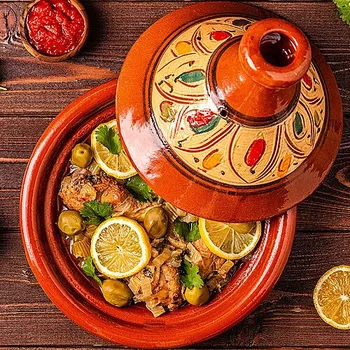
Chicken Tajine with Preserved Lemon & Olives
Chicken tajine with preserved lemon and green olives is Morocco's most loved home dish: chicken cooked until meltingly tender with onion, saffron, ginger and the tang of aged lemon. Its glycemic index does not apply, and it offers delicious protein that is very light on the digestive system.
Glycemic index
Glycemic load
Calories
Protein
💡 Smart Nutritional Guidance
Consumption advice
Enjoy the chicken with the thick dghmira sauce and the olives, with a fork or a measured piece of brown bread, alongside a Moroccan salad.
Best preparation methods
Cook the chicken over gentle heat until the onion caramelises into dghmira, without flour or starch; the tang of preserved lemon means you don't need extra salt.
Important Nutritional Note
The ginger, turmeric and saffron seasoning is a strong natural anti-inflammatory that improves insulin sensitivity, but the saltiness of the lemon and olives calls for moderation in high blood pressure.
Nutrition facts
| Nutrient | Per 100 g | Per typical portion (300 g) |
|---|---|---|
| Calories | 107 kcal | 321 kcal |
| Protein | 11.3 g | 33.9 g |
| Carbohydrate | 1.5 g | 4.5 g |
| Available carbohydrate | 1 g | 3 g |
| Fat | 6 g | 18 g |
| Dietary fibre | 0.5 g | 1.5 g |
The typical portion is approximate, for comparison purposes.
Comparison & smarter alternatives
It has 107 kcal per 100 g, ranking 5 of 9 in Moroccan dishes (lowest first).
Related foods from the same family:
Frequently asked questions
Is chicken tajine with lemon and olives suitable for diets and keto?
It is an ideal keto and diet dish: pure protein and healthy olive fats with hardly any carbohydrate or sugar.
What is the nutritional value of a 300 g portion of chicken tajine with olives?
The portion provides about 320 kcal, 34 g of excellent protein, 18 g of healthy fat and less than 5 g of carbohydrate from the caramelised onion.
Is the dghmira sauce healthy?
Yes. It is onion caramelised in olive oil with natural spices and real saffron, not hydrogenated fat.
Reviewed by the WiBo Health medical team · Last reviewed 13 October 2026
Disclaimer: This guidance is for nutritional lifestyle orientation and does not constitute a diagnostic medical device under EU Regulation MDR 2017/745.