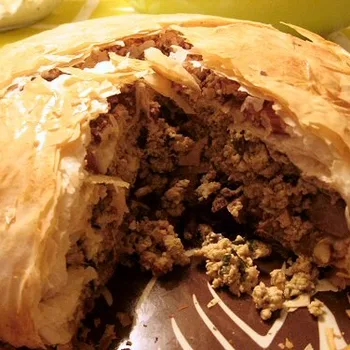
Moroccan Chicken Pastilla with Almonds
Fassi chicken pastilla is the pinnacle of time-honoured Moroccan cooking, blending sweet and savoury: thin, crisp layers of warqa pastry enclosing chicken and egg filling with caramelised almonds, cinnamon and a dusting of sugar. It has a medium glycemic index (clinically reviewed estimate ≈58) and is a refined feast dish.
Glycemic index
Glycemic load
Calories
Protein
💡 Smart Nutritional Guidance
Consumption advice
One medium triangle is enough to enjoy the flavour; eat it after a green salad to reduce the absorption of the surface sugar and the pastry starch.
Best preparation methods
For a healthier homemade version, skip the icing sugar and use only real cinnamon, and choose toasted rather than oil-fried almonds.
Important Nutritional Note
It provides excellent protein, magnesium and healthy fats from almonds, but the icing sugar and buttered pastry raise the glycemic load, so people with diabetes must be very moderate.
Nutrition facts
| Nutrient | Per 100 g | Per typical portion (150 g) |
|---|---|---|
| Calories | 267 kcal | 400.5 kcal |
| Protein | 13.3 g | 20 g |
| Carbohydrate | 21.3 g | 32 g |
| Available carbohydrate | 19.6 g | 29.4 g |
| Fat | 14.7 g | 22 g |
| Dietary fibre | 1.7 g | 2.5 g |
The typical portion is approximate, for comparison purposes.
Comparison & smarter alternatives
Among the foods in Moroccan dishes with a glycemic index (5), it ranks 4 (lowest first).
Smart alternatives from the same family:
Frequently asked questions
Why is the glycemic index of chicken pastilla medium (58)?
Because the almond fat and the protein of the chicken and eggs slow the absorption of the sugar and pastry starch, but it remains calorie-rich.
How many calories are in a typical portion of chicken pastilla (150 g)?
The portion contains about 400 kcal, 20 g of protein, 22 g of fat and around 32 g of starch and sugars.
Can someone with diabetes taste pastilla?
Yes, a small piece (100 g) without the icing sugar on top, as part of a calorie-counted meal on special occasions.
Reviewed by the WiBo Health medical team · Last reviewed 13 October 2026
Disclaimer: This guidance is for nutritional lifestyle orientation and does not constitute a diagnostic medical device under EU Regulation MDR 2017/745.