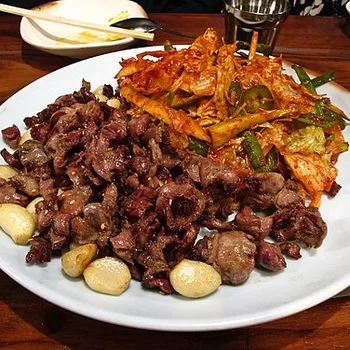
Cooked Chicken Gizzards
Cooked chicken gizzards are a nourishing, truly muscular food, known for their firm texture and a flavour loved in traditional dishes. Their glycemic index does not apply because they contain no starch, and they make a solid protein meal that supports the joints and curbs hunger for hours.
Glycemic index
Glycemic load
Calories
Protein
💡 Smart Nutritional Guidance
Consumption advice
Cook them in an oven-baked vegetable casserole with onion, garlic and natural tomato sauce, and eat them with a fork as a low-calorie main meal.
Best preparation methods
Because their muscle tissue is dense, they need to be simmered first with aromatic spices (cardamom, bay leaf and cinnamon) until tender before sautéing.
Important Nutritional Note
Very rich in natural collagen and glucosamine, which help repair joint cartilage and keep skin and connective tissue supple.
Nutrition facts
| Nutrient | Per 100 g | Per typical portion (100 g) |
|---|---|---|
| Calories | 146 kcal | 146 kcal |
| Protein | 30 g | 30 g |
| Carbohydrate | 0 g | 0 g |
| Available carbohydrate | 0 g | 0 g |
| Fat | 2.1 g | 2.1 g |
| Dietary fibre | 0 g | 0 g |
The typical portion is approximate, for comparison purposes.
Comparison & smarter alternatives
It provides 20.5 g of protein per 100 kcal, ranking 14 of 49 in Meat, fish & eggs (highest first).
Related foods from the same family:
Frequently asked questions
Are chicken gizzards suitable for dieting and muscle building?
They are one of the best budget choices: pure muscle, rich in protein and almost free of fat and carbohydrate.
What is the nutritional value of a 100 g portion of boiled chicken gizzards?
It contains about 145 kcal, 30 g of muscle protein and less than 3 g of fat, with zero carbohydrate.
Are gizzards hard to digest for people with a sensitive stomach?
Yes, if they are not cooked well, so cook them until fully tender to make their dense collagen fibres easier to digest.
Reviewed by the WiBo Health medical team · Last reviewed 13 October 2026
Disclaimer: This guidance is for nutritional lifestyle orientation and does not constitute a diagnostic medical device under EU Regulation MDR 2017/745.