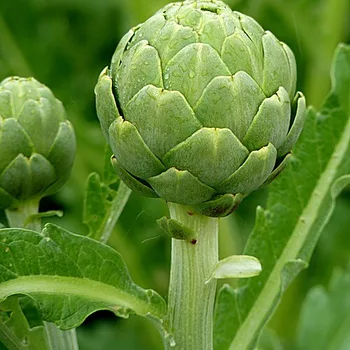
Artichoke Hearts in Water
Canned artichoke hearts are an exceptional food for the liver and gallbladder thanks to their unique prebiotic fibre. Their glycemic index does not apply because their net carbohydrate is low, and they are a tasty, nourishing addition to all kinds of healthy dishes.
Glycemic index
Glycemic load
Calories
Protein
💡 Smart Nutritional Guidance
Consumption advice
Slice artichoke hearts over a Greek salad with olive oil, lemon juice and white cheese, or eat them sautéed with garlic and herbs.
Best preparation methods
Choose hearts preserved in water and salt rather than in poor-quality commercial vegetable oils, and give them a quick rinse to tone down the saltiness.
Important Nutritional Note
One of the richest natural sources of inulin, a remarkable fibre that feeds the gut microbiome and helps lower insulin resistance and cholesterol.
Nutrition facts
| Nutrient | Per 100 g | Per typical portion (100 g) |
|---|---|---|
| Calories | 35 kcal | 35 kcal |
| Protein | 2.4 g | 2.4 g |
| Carbohydrate | 7.2 g | 7.2 g |
| Available carbohydrate | 2.4 g | 2.4 g |
| Fat | 0.2 g | 0.2 g |
| Dietary fibre | 4.8 g | 4.8 g |
The typical portion is approximate, for comparison purposes.
Comparison & smarter alternatives
It has 35 kcal per 100 g, ranking 40 of 57 in Vegetables (lowest first).
Related foods from the same family:
Frequently asked questions
Do artichoke hearts raise blood sugar?
Not at all. They contain almost no absorbable starch, and their inulin fibre improves blood-sugar control over the long term.
How many calories are in a 100 g portion of canned artichoke hearts?
Only about 35 kcal, with 2.4 g of protein and 5 g of dietary fibre that is very good for the gut.
How do artichokes help people with fatty liver?
They contain cynarin and luteolin, which stimulate bile flow and help the liver clear fat and toxins.
Reviewed by the WiBo Health medical team · Last reviewed 13 October 2026
Disclaimer: This guidance is for nutritional lifestyle orientation and does not constitute a diagnostic medical device under EU Regulation MDR 2017/745.