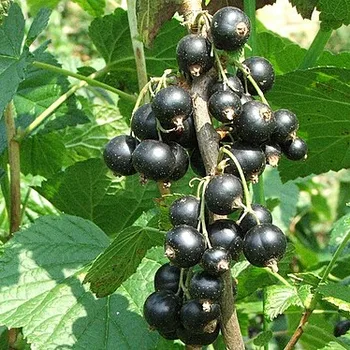
Blackcurrants
The dark purple pearl and the most nutrient-rich of all berries (cassis): a bold flavour combining aromatic sharpness with a tartness rich in anthocyanins and plenty of vitamin C. Blackcurrants have a very low glycemic index (≈25) and an excellent effect on metabolic stability.
Glycemic index
Glycemic load
Calories
Protein
💡 Smart Nutritional Guidance
Consumption advice
Add a handful to your morning bowl of Greek yoghurt or oats; the dark pigments give the meal a cheerful colour and noticeably slow the absorption of carbohydrate.
Best preparation methods
Enjoy the fresh berries as they are with their thin dark skins, and avoid processed blackcurrant juices or commercial cassis syrup loaded with concentrated sugar.
Important Nutritional Note
Blackcurrants contain four times the vitamin C of an orange, plus antioxidants that protect flexible blood vessels; an exceptional choice for heart health and stable blood sugar.
Nutrition facts
| Nutrient | Per 100 g | Per typical portion (50 g) |
|---|---|---|
| Calories | 63 kcal | 31.5 kcal |
| Protein | 1.4 g | 0.7 g |
| Carbohydrate | 15.4 g | 7.7 g |
| Available carbohydrate | 8.6 g | 4.3 g |
| Fat | 0.4 g | 0.2 g |
| Dietary fibre | 6.8 g | 3.4 g |
The typical portion is approximate, for comparison purposes.
Comparison & smarter alternatives
Among the foods in Fruit with a glycemic index (43), it ranks 7 (lowest first).
Smart alternatives from the same family:
Frequently asked questions
Is Blackcurrants good for weight loss?
It can be included in moderation: it contains 6.8 g of fibre per 100 g, which supports fullness, and a 50 g portion gives 32 kcal.
How does Blackcurrants affect blood sugar?
Its glycemic index is 25 (Low), a clinically reviewed estimate rather than a laboratory measurement. A typical 50 g portion has a glycemic load of 1.1 (Low), so the effect of this portion on blood sugar is limited.
What is the nutritional value of a typical portion of Blackcurrants?
A typical 50 g portion of Blackcurrants provides about 32 kcal, 0.7 g protein, 7.7 g carbohydrate, 0.2 g fat and 3.4 g fibre.
Reviewed by the WiBo Health medical team · Last reviewed 13 October 2026
Disclaimer: This guidance is for nutritional lifestyle orientation and does not constitute a diagnostic medical device under EU Regulation MDR 2017/745.