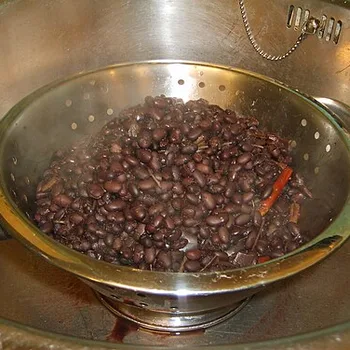
Black Turtle Beans
Black beans are the shining star of Latin American cooking and a true friend of the heart: their deep black colour hides a huge concentration of artery-protecting antioxidants. With a low glycemic index (clinically reviewed estimate ≈30), they provide a steady supply of energy without sudden blood-sugar spikes.
Glycemic index
Glycemic load
Calories
Protein
💡 Smart Nutritional Guidance
Consumption advice
Mix them with sweet corn, colourful peppers, avocado and lemon juice for a healthy taco salad rich in protein and beneficial fats.
Best preparation methods
Rinse canned beans well under running water to remove excess sodium, or boil dried beans after soaking them overnight with a clove of garlic and a little cumin.
Important Nutritional Note
Their unique soluble fibre ferments in the colon to produce butyrate, the main fuel for the cells of the gut wall, helping to prevent inflammation and colon cancer.
Nutrition facts
| Nutrient | Per 100 g | Per typical portion (150 g) |
|---|---|---|
| Calories | 132 kcal | 198 kcal |
| Protein | 8.9 g | 13.4 g |
| Carbohydrate | 23.7 g | 35.5 g |
| Available carbohydrate | 15 g | 22.5 g |
| Fat | 0.5 g | 0.8 g |
| Dietary fibre | 8.7 g | 13 g |
The typical portion is approximate, for comparison purposes.
Comparison & smarter alternatives
Among the foods in Legumes with a glycemic index (16), it ranks 9 (lowest first).
Smart alternatives from the same family:
Frequently asked questions
Are black beans safe for people with diabetes?
They are among the best foods for them: their low glycemic index and rich fibre content keep blood sugar from rising after meals.
What is the nutritional value of a 150 g portion of black beans?
It provides about 200 kcal, 13 g of protein and around 13 g of fibre, excellent for digestion and lowering cholesterol.
Do black beans help lower blood pressure?
Yes, because they are naturally rich in potassium, magnesium and calcium, which relax the artery walls and help the body get rid of sodium.
Reviewed by the WiBo Health medical team · Last reviewed 13 October 2026
Disclaimer: This guidance is for nutritional lifestyle orientation and does not constitute a diagnostic medical device under EU Regulation MDR 2017/745.