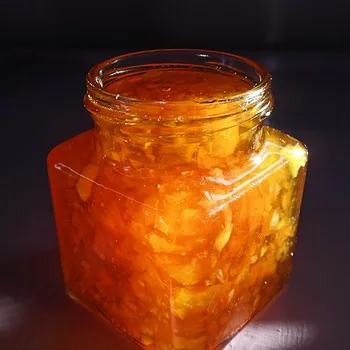
Bitter Seville Orange Marmalade
Bitter orange (Seville orange) marmalade is the jewel of Levantine and Mediterranean preserves, with aromatic peel and a balanced taste between pleasant bitterness and oriental sweetness. It has a low glycemic index (clinically reviewed estimate ≈52), thanks to the abundant pectin fibre in the bitter-orange peel.
Glycemic index
Glycemic load
Calories
Protein
💡 Smart Nutritional Guidance
Consumption advice
Have just one level tablespoon (15 g) on a piece of white cheese or cottage cheese with wholegrain bread, to keep the sugar dose in check.
Best preparation methods
For a healthy homemade version, boil the curled peel several times to remove excess bitterness, and use half the usual sugar or a natural stevia sweetener.
Important Nutritional Note
Important clinical warning: bitter-orange peel contains the stimulant synephrine, so people with a fast heart rate or high blood pressure should be careful and avoid it together with sensitive blood-pressure medication.
Nutrition facts
| Nutrient | Per 100 g | Per typical portion (15 g) |
|---|---|---|
| Calories | 235 kcal | 35.2 kcal |
| Protein | 0.6 g | 0.1 g |
| Carbohydrate | 58 g | 8.7 g |
| Available carbohydrate | 55.9 g | 8.4 g |
| Fat | 0.1 g | 0 g |
| Dietary fibre | 2.1 g | 0.3 g |
The typical portion is approximate, for comparison purposes.
Comparison & smarter alternatives
Among the foods in Special ingredients & supplements with a glycemic index (6), it ranks 5 (lowest first).
Smart alternatives from the same family:
Frequently asked questions
Is bitter orange marmalade suitable for people with diabetes?
Its glycemic index is relatively low (≈52) thanks to the pectin, but it is still a sugary preserve, so only one teaspoon (10–15 g) is allowed, as part of a protein-rich meal.
What is the nutritional value of a tablespoon of bitter orange marmalade (15 g)?
It contains about 35 kcal, practically no fat or protein, and around 9 g of fast carbohydrate and sugars.
What are the health benefits of bitter-orange peel?
It is rich in flavonoids, limonene, essential oils and pectin, which helps reduce cholesterol absorption.
Reviewed by the WiBo Health medical team · Last reviewed 13 October 2026
Disclaimer: This guidance is for nutritional lifestyle orientation and does not constitute a diagnostic medical device under EU Regulation MDR 2017/745.