
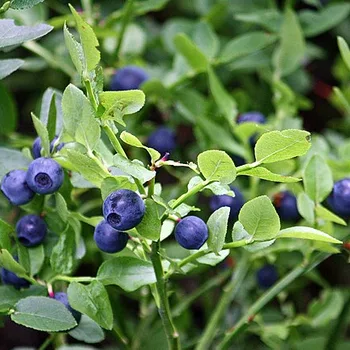
Wild Bilberries
Quick answer
A medium portion of Wild Bilberries (100 g) contains 44 kcal, with 8.7 g of net carbohydrates and 0.7 g of protein. Its glycemic index is 25 (Low) for how fast it raises blood sugar, while its glycemic load per portion is 2.2 (Low) for its actual effect.
- Carbs11.5 g86.3%
- Protein0.7 g5.3%
- Fat0.5 g8.4%
- Fibre2.8 g
Percentages of total energy (calories)
Many people think it is just an ordinary blueberry, but the difference is big! Bilberries grow wild in the forests of northern Europe and Scandinavia, and when you split one you will not find the pale flesh of supermarket blueberries, but dark purple flesh that stains your fingers at once. That deep colour is a sign of a high concentration of natural anthocyanin pigments, which act as antioxidants. With a low estimated glycemic index (25) and a glycemic load of only 2.2 per portion, they are a great choice if you watch your blood sugar.
💡 Smart Nutritional Guidance
Consumption advice
A full handful, fresh or frozen (100 g), a day.
Best preparation methods
Add them as they are to your morning oats or to Greek yoghurt with chia seeds, and avoid long cooking at high heat so you keep as much of their heat-sensitive pigments as possible.
Important Nutritional Note
Their strong colour stains your tongue and lips purple for a while, which is perfectly normal. Concentrated bilberry extract supplements are different from the fruit; ask your doctor before taking them with blood-thinning medicines.
Nutrition facts
| Nutrient | Per 100 g | Per typical portion (100 g) |
|---|---|---|
| Calories | 44 kcal | 44 kcal |
| Protein | 0.7 g | 0.7 g |
| Carbohydrate | 11.5 g | 11.5 g |
| Available carbohydrate | 8.7 g | 8.7 g |
| Fat | 0.5 g | 0.5 g |
| Dietary fibre | 2.8 g | 2.8 g |
The typical portion is approximate, for comparison purposes.
Comparison & smarter alternatives
Among the foods in Fruit with a glycemic index (57), it ranks 11 (lowest first).
Smart alternatives from the same family:
Frequently asked questions
Is Wild Bilberries good for weight loss?
Yes. Wild Bilberries is very low in calories (44 kcal per 100 g), so you can eat a generous amount to add volume and fullness to a meal without many calories.
How does Wild Bilberries affect blood sugar?
Its glycemic index is 25 (Low), a clinically reviewed estimate rather than a laboratory measurement. A typical 100 g portion has a glycemic load of 2.2 (Low), so the effect of this portion on blood sugar is limited.
What is the nutritional value of a typical portion of Wild Bilberries?
A typical 100 g portion of Wild Bilberries provides about 44 kcal, 0.7 g protein, 11.5 g carbohydrate, 0.5 g fat and 2.8 g fibre.
What is the real difference between wild bilberries and supermarket blueberries?
Cultivated blueberries are bigger with pale flesh, while wild bilberries are smaller, dark all the way through, and contain several times more anthocyanin pigments. Both have a low glycemic index.
Do bilberries help eye health in people with diabetes?
Their anthocyanins are antioxidants, so their role in the health of small blood vessels is being studied, but evidence that they improve eyesight or prevent retinopathy in people is still insufficient. What protects your eyes most is controlling blood sugar and blood pressure and having regular eye checks.
Do frozen bilberries lose their value compared with fresh ones?
No. Quick freezing after picking keeps most of their pigments and vitamins, so they remain an excellent choice that is available all year round.
Read also
- Prediabetes: How to Stop the Train and Lower Your HbA1cGuide
- Gestational Diabetes Guide: Normal Levels and Foods to EatGuide
References & Scientific Sources
- The glycemic index of this food is a clinically reviewed estimate by the WiBo Health medical team, not a laboratory measurement from the International GI Tables (Atkinson 2021). GI bands (low ≤ 55 · medium 56–69 · high ≥ 70) follow: ISO 26642:2010. Food products — Determination of the glycaemic index (GI) and recommendation for food classification. International Organization for Standardization; 2010. www.iso.org/standard/43633.html
- Definition of available carbohydrate and glycemic load: FAO/WHO. Carbohydrates in human nutrition: report of a joint FAO/WHO expert consultation. FAO Food and Nutrition Paper 66. Rome; 1998. www.fao.org/4/w8079e/w8079e00.htm
Reviewed by Dr. Wassim Habib · Last reviewed 20 October 2026
Disclaimer: This guidance is for nutritional lifestyle orientation and does not constitute a diagnostic medical device under EU Regulation MDR 2017/745.