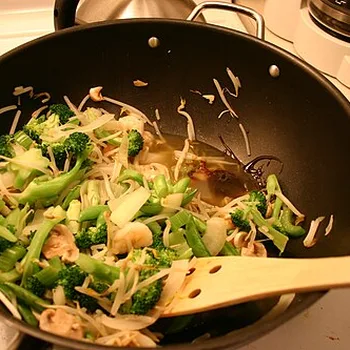
Aloo Gobi Potato & Cauliflower Stir-Fry
Aloo gobi is the classic Indian home-style potato and cauliflower curry: crisp cauliflower florets and browned potato cubes with turmeric, ginger, cumin and coriander. It has a low glycemic index (clinically reviewed estimate ≈48), as the cauliflower fibre offsets the high glycemic index of the potato.
Glycemic index
Glycemic load
Calories
Protein
💡 Smart Nutritional Guidance
Consumption advice
Make sure your portion has more cauliflower than potato, and eat it with a fork alongside grilled protein or a green salad.
Best preparation methods
Cook the cauliflower and potato in a pan with steam and spices and little water, so the florets stay crisp instead of falling apart and soaking up frying oil.
Important Nutritional Note
Cauliflower is rich in anti-cancer sulforaphane, and the turmeric cooked with it provides anti-inflammatory curcumin, making the dish natural prevention for the body.
Nutrition facts
| Nutrient | Per 100 g | Per typical portion (200 g) |
|---|---|---|
| Calories | 80 kcal | 160 kcal |
| Protein | 2 g | 4 g |
| Carbohydrate | 12 g | 24 g |
| Available carbohydrate | 9.5 g | 19 g |
| Fat | 2.5 g | 5 g |
| Dietary fibre | 2.5 g | 5 g |
The typical portion is approximate, for comparison purposes.
Comparison & smarter alternatives
Among the foods in Indian dishes with a glycemic index (5), it ranks 4 (lowest first).
Smart alternatives from the same family:
Frequently asked questions
Is aloo gobi suitable for people with diabetes even though it contains potato?
Yes, in moderation: its glycemic index is low (≈48), because the large amount of cauliflower, the spices and mustard oil slow the absorption of the potato starch.
What is the nutritional value of a 200 g portion of cooked aloo gobi?
The portion contains about 160 kcal, 4 g of protein, 5 g of healthy fat and 24 g of carbohydrate (5 g of it fibre).
How can I make aloo gobi keto-friendly?
Replace the potato cubes with courgette or tofu, or use only cauliflower (gobi masala).
Reviewed by the WiBo Health medical team · Last reviewed 13 October 2026
Disclaimer: This guidance is for nutritional lifestyle orientation and does not constitute a diagnostic medical device under EU Regulation MDR 2017/745.