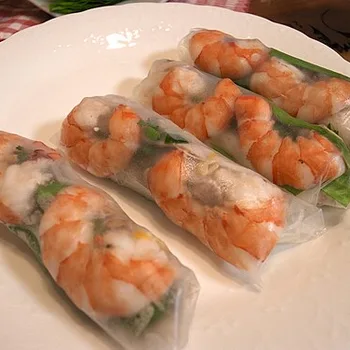
Fresh Vietnamese Summer Rolls with Shrimp
Fresh Vietnamese summer rolls (gỏi cuốn) are rolls of freshness and lightness: boiled prawns and fresh herbs such as mint and coriander with lettuce and cucumber, wrapped in translucent, uncooked rice paper. They have a low glycemic index (clinically reviewed estimate ≈35) and are a worldwide favourite of clean eating.
Glycemic index
Glycemic load
Calories
Protein
💡 Smart Nutritional Guidance
Consumption advice
Have two or three rolls dipped in natural peanut sauce or a lime-and-chilli dressing; a light meal that is ideal for fat burning.
Best preparation methods
Dip the rice paper in warm water for a few seconds until soft, then roll it tightly around the prawns and herbs; don't fry them, so they stay fresh, healthy summer rolls.
Important Nutritional Note
Completely free of hydrogenated fat and gluten, they provide quickly absorbed seafood protein with plenty of hydration from raw herbs and vegetables rich in enzymes.
Nutrition facts
| Nutrient | Per 100 g | Per typical portion (150 g) |
|---|---|---|
| Calories | 110 kcal | 165 kcal |
| Protein | 7.5 g | 11.2 g |
| Carbohydrate | 16 g | 24 g |
| Available carbohydrate | 14.2 g | 21.3 g |
| Fat | 1.5 g | 2.2 g |
| Dietary fibre | 1.8 g | 2.7 g |
The typical portion is approximate, for comparison purposes.
Comparison & smarter alternatives
Among the foods in Asian dishes with a glycemic index (18), it ranks 4 (lowest first).
Smart alternatives from the same family:
Frequently asked questions
What is the difference between summer rolls and fried spring rolls?
Summer rolls are eaten fresh in translucent rice paper with no frying at all (very light in calories), while spring rolls are deep-fried in oil and are rich.
How many calories are in two prawn summer rolls (150 g)?
The portion contains about 165 kcal, 11 g of seafood protein, about 2 g of fat and 24 g of light carbohydrate.
Does rice paper raise blood sugar?
A sheet of rice paper is very thin and weighs only a few grams, and the prawns and vegetables inside make its glycemic effect slow and very gentle (≈35).
Reviewed by the WiBo Health medical team · Last reviewed 13 October 2026
Disclaimer: This guidance is for nutritional lifestyle orientation and does not constitute a diagnostic medical device under EU Regulation MDR 2017/745.