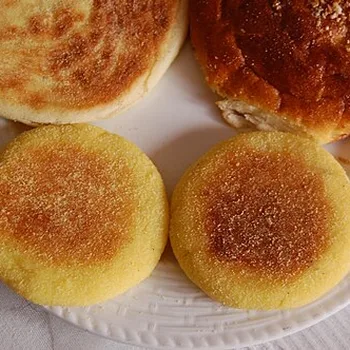
Harcha Moroccan Semolina Pan Bread
Moroccan harcha is the golden pan bread made with semolina, butter and olive oil, crisp and grainy outside and soft inside, the companion of afternoon tea in Moroccan cafés. It has a medium glycemic index (clinically reviewed estimate ≈68) and provides warm, dense energy.
Glycemic index
Glycemic load
Calories
Protein
💡 Smart Nutritional Guidance
Consumption advice
Keep to one small, palm-sized triangle spread with white country cheese or olive oil instead of sugary jam, to balance the semolina starch.
Best preparation methods
Make harcha with extra virgin olive oil and wholemeal semolina instead of processed butter and refined semolina, to cut saturated fat and double the fibre.
Important Nutritional Note
Semolina is rich in fast starch and dense in calories, so people with insulin resistance or fatty liver need strict portion control with harcha.
Nutrition facts
| Nutrient | Per 100 g | Per typical portion (80 g) |
|---|---|---|
| Calories | 295 kcal | 236 kcal |
| Protein | 6.8 g | 5.4 g |
| Carbohydrate | 48 g | 38.4 g |
| Available carbohydrate | 45.2 g | 36.2 g |
| Fat | 8.5 g | 6.8 g |
| Dietary fibre | 2.8 g | 2.2 g |
The typical portion is approximate, for comparison purposes.
Comparison & smarter alternatives
Among the foods in Breads & pastries with a glycemic index (16), it ranks 14 (lowest first).
Smart alternatives from the same family:
Frequently asked questions
Why does harcha raise blood sugar quickly?
Because it is based on fine, quickly digested semolina, and its glycemic index is medium (≈68), which calls for moderation in quantity.
What is the nutritional value of a typical piece of harcha (80 g)?
It provides about 235 kcal, 5 g of protein, 7 g of fat and around 38 g of dense starch.
Is barley harcha (belboula harcha) healthier?
Much healthier: replacing wheat semolina with barley grits adds beta-glucan fibre and lowers the glycemic index considerably for people with diabetes.
Reviewed by the WiBo Health medical team · Last reviewed 13 October 2026
Disclaimer: This guidance is for nutritional lifestyle orientation and does not constitute a diagnostic medical device under EU Regulation MDR 2017/745.