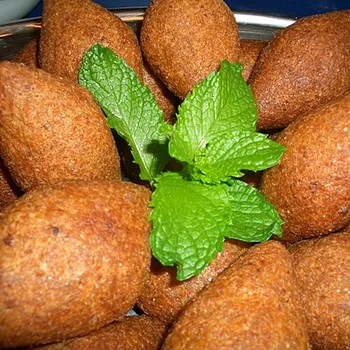
Baked Tray Kibbeh (Kibbeh Bil Saniyeh)
Baked tray kibbeh (kibbeh bil saniyeh) is the finest and healthiest choice for kibbeh lovers: two layers of lean meat and bulgur enclosing a filling of spiced minced meat and pine nuts, baked in the oven. It has a low glycemic index (clinically reviewed estimate ≈50) and is a far better alternative to deep-fried kibbeh.
Glycemic index
Glycemic load
Calories
Protein
💡 Smart Nutritional Guidance
Consumption advice
Have a medium, palm-sized piece with a cucumber-yoghurt salad or a green salad for a fully balanced meal.
Best preparation methods
Bake it with a light brush of olive oil or natural ghee instead of a lot of fat, and use more lean meat relative to the bulgur.
Important Nutritional Note
Bulgur is a whole wheat grain, rich in fibre with a low glycemic index; combined with meat protein it gives great fullness and very stable blood-sugar readings.
Nutrition facts
| Nutrient | Per 100 g | Per typical portion (150 g) |
|---|---|---|
| Calories | 270 kcal | 405 kcal |
| Protein | 16 g | 24 g |
| Carbohydrate | 21 g | 31.5 g |
| Available carbohydrate | 17.8 g | 26.7 g |
| Fat | 14 g | 21 g |
| Dietary fibre | 3.2 g | 4.8 g |
The typical portion is approximate, for comparison purposes.
Comparison & smarter alternatives
Among the foods in Arabic dishes with a glycemic index (37), it ranks 29 (lowest first).
Smart alternatives from the same family:
Frequently asked questions
Is tray kibbeh better than fried kibbeh for people with diabetes?
Far better: baking saves hundreds of calories and avoids the fat oxidation caused by deep frying.
What is the nutritional value of a piece of tray kibbeh (150 g)?
A piece contains about 405 kcal, 24 g of excellent protein, 21 g of fat and around 31.5 g of slowly absorbed carbohydrate.
Is tray kibbeh suitable for weight-loss diets?
Yes, a great diet choice: one piece keeps you full for hours and supplies your muscles with protein and iron.
Reviewed by the WiBo Health medical team · Last reviewed 13 October 2026
Disclaimer: This guidance is for nutritional lifestyle orientation and does not constitute a diagnostic medical device under EU Regulation MDR 2017/745.