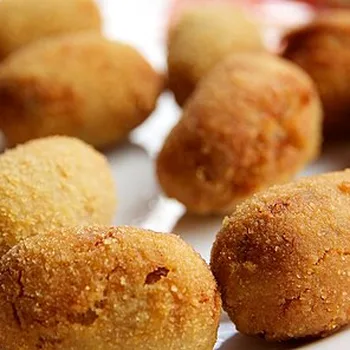
Spanish Veggie Croquettes
Spanish vegetable croquettes (croquetas de verduras) are one of the best-known tapas: crisp outside and silky inside thanks to a béchamel and caramelised-vegetable filling. They have a low glycemic index (clinically reviewed estimate ≈53), as the olive oil fat helps curb the absorption of the béchamel flour, but they remain a treat that needs portion control.
Glycemic index
Glycemic load
Calories
Protein
💡 Smart Nutritional Guidance
Consumption advice
Have just two as a taste, alongside a green salad dressed with vinegar and lemon juice to lighten the glycemic load of the meal.
Best preparation methods
Bake them in an air fryer with a spray of olive oil instead of deep frying, for the same crunch with a third of the calories and fat.
Important Nutritional Note
The traditional béchamel filling contains flour, milk and butter, so people with lactose intolerance or insulin resistance should be very moderate.
Nutrition facts
| Nutrient | Per 100 g | Per typical portion (100 g) |
|---|---|---|
| Calories | 235 kcal | 235 kcal |
| Protein | 7.5 g | 7.5 g |
| Carbohydrate | 24 g | 24 g |
| Available carbohydrate | 22 g | 22 g |
| Fat | 12 g | 12 g |
| Dietary fibre | 2 g | 2 g |
The typical portion is approximate, for comparison purposes.
Comparison & smarter alternatives
Among the foods in Spanish dishes with a glycemic index (6), it ranks 3 (lowest first).
Smart alternatives from the same family:
Frequently asked questions
Are Spanish vegetable croquettes suitable for people with diabetes?
Their glycemic index is low (≈53), but they are rich in calories and flour, so keep to one or two pieces at most within a meal.
How many calories are in a 100 g portion of vegetable croquettes?
The portion (two medium croquettes) contains about 235 kcal, 7.5 g of protein, 12 g of fat and around 24 g of carbohydrate.
How can I make croquettes a healthier choice at home?
Use oat or almond flour in the béchamel, fill them with spinach and mushrooms, and cook them in an air fryer.
Reviewed by the WiBo Health medical team · Last reviewed 13 October 2026
Disclaimer: This guidance is for nutritional lifestyle orientation and does not constitute a diagnostic medical device under EU Regulation MDR 2017/745.