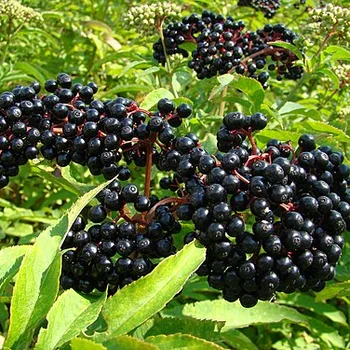
Cooked Elderberries (Immune Support)
A protective winter shield and guardian of the airways: shiny black berries hanging in clusters, famous in European folk medicine as the strongest natural syrup against colds, flu and coughs.
Glycemic index
Glycemic load
Calories
Protein
💡 Smart Nutritional Guidance
Consumption advice
Always take it as a cooked, strained syrup or a home-made jam with a healthy sweetener; a tablespoon a day makes a great immune boost in winter.
Best preparation methods
Important clinical warning: never eat elderberries raw. Raw berries, leaves and stems contain cyanogenic glycosides that cause nausea, vomiting and poisoning; thorough cooking breaks these compounds down and makes the berries safe.
Important Nutritional Note
Its glycemic index is low (30) and the glycemic load of a 50 g portion is only 1.7; rich in anthocyanins, which hinder viruses from attaching to the cells of the throat.
Nutrition facts
| Nutrient | Per 100 g | Per typical portion (50 g) |
|---|---|---|
| Calories | 73 kcal | 36.5 kcal |
| Protein | 0.7 g | 0.3 g |
| Carbohydrate | 18.4 g | 9.2 g |
| Available carbohydrate | 11.4 g | 5.7 g |
| Fat | 0.5 g | 0.2 g |
| Dietary fibre | 7 g | 3.5 g |
The typical portion is approximate, for comparison purposes.
Comparison & smarter alternatives
Among the foods in Fruit with a glycemic index (46), it ranks 14 (lowest first).
Smart alternatives from the same family:
Frequently asked questions
Does elderberry syrup really treat colds and flu?
Small randomised clinical trials have shown that cooked elderberry extract may shorten flu symptoms by 3 to 4 days by inhibiting viral replication.
Are elderberries safe for people with diabetes?
The cooked berries themselves are low in sugar and safe, but beware of ready-made commercial elderberry syrups full of glucose syrup and added sugar.
What is the nutritional value of a 50 g portion cooked without sugar?
It gives you 36 kcal, 3.5 g fibre and only 5.7 g available (net) carbohydrate.
Reviewed by the WiBo Health medical team · Last reviewed 13 October 2026
Disclaimer: This guidance is for nutritional lifestyle orientation and does not constitute a diagnostic medical device under EU Regulation MDR 2017/745.